Articles
SDA Certification and Report
- ROOT
- Articles
- Monday, 16 September 2024 19:07
- Friday, 06 September 2024 10:47
- Administrator
- Hits: 59994
We service SDA Australia wide, though, the majority of the work is a desktop audit performed by Gary Finn, who enjoys seeing the world, armed with an ipad and a great camera.
Sydney Access Consultants offer two branches of service in the SDA space.
Firstly, as architects who have worked in the design of homes for people who live with disabilities for around 40 years, we can offer very specific design and development advice targeting your successful venture into SDA. However, the majority of our clients are architects for whom we work directly as Access Consultants and SDA certifiers without competing interests, and for the best SDA outcomes, a diversity in design approach is essential.
Obviously as SDA assessors, the second branch of service involves working with your architect to project the required SDA certifications necessary for your SDA development to be enrolled with the NDIS program. Simple probity requires that we cannot perform both of these service branches on any specific development.
For SDA certification, the subject of this article, please advise the category and type of SDA you wish to register so that we can point our advice to that outcome. If you have building plans and haven't already done so, then please send them now.
SDA Assessments
There are two certification components. Firstly, an assessment of the SDA Design as shown on your Construction drawings. Finally an assessment of the dwelling on completion.
Design Stage Certification
When complying plans are finalised by your architect, an SDA certificate is issued, for each dwelling. Our proposed fee, is derived on a per examination certificate basis. However, we will guide the design with appropriate feedback annotated on your plans to ensure the certification process meets its objectives and your architect can quickly resolve the design of any outstanding matters. With competent professionals at your side this process typically entails one review with plan mark ups, and a following certificate upon receipt of your complying design.
As Built Stage Certification
There is a second round of certification processes required at "as built" stage, one certificate for each dwelling. We are aware that having four different standards, with their own nuances, many tradesmen have developed a poor understanding of hte standards because they may have had experience with one type, but not necessarily the classification of SDA you are developing. There seems to be a lot of misinformation out there from in-experienced "experts" involved in middle management, and all of these circumstances lead to a profusion of very "loose facts" when it comes to the onsite reviews we have conducted since the inception of SDA.
As an experienced project manager for State and Federal Government projects and a licensed builder in NSW, the principal architect is available on the phone to field questions [RFI] that typically arise during construction, and we have developed a number of cheat sheets to issue to your builder for its subcontractors, to help eliminate the most costly co-ordination issues, errors and omissions. These "trade notes" minimise the number of site visits that would be necessary to ensure satisfactory SDA certification at "as built" stage.
Still, it is prudent to get an inspection by the SDA certifier prior to installing internal linings, to reduce the potential nuisance of a millimetre tolerance issue, that would prevent release of the as built certificates. When an interim site inspection is required, a site visit is scheduled for a fixed fee agreed in advance.
Then, on completion, a final inspection is conducted to prepare the certificates required by the NDIS. If work is incomplete, further inspections are required until all the errors and omissions have been addressed. Re-inspections incur additional costs, which can be overwhelming for remote sites, so we will agree a fee in advance, and we take every precaution and delight, in conducting just one final inspection, feeling chuffed that our RFI service and "trade notes" have worked a treat. The SDA certificates are independent of your Building's occupancy certificates, though, often the inspections are conducted concurrently by the differing professionals.
Finally, prior to release of the As built Certificate there are a few housekeeping matters that need to be provided for the record. These are basic but critical and could be provided to us prior to the "as built" inspection:
- Emergency evacuation plan shall be provided to the occupier or their 24.2 supports, which may include a path of travel to a safe place.
- As evidenced by documentation provided by instructing party and held on file, are Density Rules met?
- Letter of confirmation from Builder in regard to provision of at least the following:
- Slip resistance to all areas as required by the SDA Design Standard.
Applies to all design categories. - All sanitary compartments have walls either constructed of masonry or concrete or been provided with wall reinforcement of minimum 12mm thick sheeting from FFL and extending to a height of minimum 2100mm from FFL.
Applies to all design categories. - Carpets if provided have a pile height or thickness of not more than 11mm and carpet backing not more than 4mm.
Applies to all design categories. - Where ducted air-conditioning is provided, zoning of habitable rooms is provided.
Applies only to Fully Accessible and High Physical Support design categories. - Internet connection has been provided with ability for high speed internet speed and wifi coverage achievable throughout the house.
Applies only to Fully Accessible and High Physical Support design categories. - Resilient materials including high impact wall linings have been provided, participant’s bedrooms have been provided with sound insulation and high impact / vandal proof fittings and fixtures have been provided.
Applies only to Robust design category. - Certification is provided from a Qualified, Insured and Practicing Structural Engineer that states that the participant’s bedroom has been inspected and have been provided with power and inbuilt structure capable of installation of a minimum 250kg load capacity, constant charge ceiling hoist which is capable of going across the bed and down the bed.
Applies only to High Physical Support design category. - Certification is provided from an electrician or builder to confirm that emergency power solutions are provided to cater for a minimum 2 hour outage in no less than 2 GPOs in bedrooms and any provided automated doors used for entry and egress.
Applies only to High Physical Support design category.
- Slip resistance to all areas as required by the SDA Design Standard.
Existing Houses
If you intend to convert an existing dwelling for use as SDA, our observations are that the NDIS currently discourage the concept. It does so, by either requiring a recent Occupancy Certificate from a Building Certifier, or, by introducing an exorbitant minimum expenditure on renovations costs which must be proven. Please refer to the current NDIS SDA Pricing and Payments Guides available on the NDIS website.
If you think your proposed project in could do with an SDA Assessment and Certification, please call at your convenience to get the ball rolling.
As you are aware, the NDIS is being carried out across the country to more than 600,000 Australians who live with disabilities. It has been a learning curve for us all, but particular patterns of development have emerged. We highly recommend that you consider introducing housing diversity, rather than resorting to the corridor down the middle of a row of bedrooms design, as it is obvious that participants will, like you, choose to reside in a home that they feel is their forever home. Ask yourself "Would I live here?"
Our objective in preparing the report is to assist you to register your housing for SDA in the category that best suits your plans, or existing building, as the case may be.
There are several categories of home for registration under NDIS as SDA. These are:
New Builds:
- Improved livability
- Fully Accessible
- Robust
- High Physical Support
Existing Stock:
- Basic
- Improved livability
- Fully Accessible
- Robust
- High Physical Support
Legacy:
- Basic
- Improved livability
- Fully Accessible
- Robust
- High Physical Support
The majority of SDA will be registered in new builds category, as the existing stock and legacy categories are for dwellings that were occupied, often loong before the introduction of the NDIS.
Additional funding is provided for Onsite Overnight Assistance; break out rooms (robust category home only) and for Fire Sprinklers.
Each of the nominated categories above have specific inclusion requirements to enable them to be registered.
With respect to the SDA Standard, these requirements are mandatory and unwavering. It is pass or fail with no discretion for millimetre errors and building tolerances. Your architect is encouraged not to try and achieve the minimum, because your builder is using materials that are never perfect or precise.
Each SDA design category has its own additional requirements which we can advise on. Also, we have prepared trade by trade guide notes for the builder to issue to his team, so that they understand what is important in achiving certification for their trade, in the class of building you nominate.
There is also a limit on the number of SDA recipients that can reside on each alotment of land, which we can direct you to, via the SDA Rules.
SDA Assessment Report.
We will provide this type of report, which is a study that examines your designs and will provide information to help you to proceed with your project towards enrolment on completion. It includes a Certificate if we have received plans demonstrating compliance with the SDA Design Standards for the category in which you seek enrolment.
This Report is not intended to provide a guarantee because there is no certainty surrounding the requirements for registration of SDA homes, by reason that, the rules are still being developed by the NDIA.
When you have provided complying documents I issue a certificate to you to assist you in enrolling the dwelling for SDA, and I will also issue the Certificate and your documents, as well as the NDIS checklist to the NDIS for their records.
What is included in this Report
This Assessment process will assess your plans against your nominated category of SDA and provide advice on the additional measures required to satisfy the current requirements for enrolment under NDIS as SDA, as outlined in the current relevant documents published by NDIA. Where appropriate, we will issue a certificate demonstrating compliance with the SDA Standards.
The following are specifically not included in this Report:
The registration/enrolment process for NDIS SDA housing.
GENERAL TERMS & CONDITIONS
Available upon application.
Please call at your convenience on 0295863111
Kind regards
Gary Finn
0414414101
(Cert iv Access Consulting)
Architect Principal #5774 (NSW)
Builder #51908C (NSW)
Access Consultant #435
Principal Design Practitioner #PDP0000496
SDA Accredited Assessor #SDA00039
Sydney Access Consultants
http://www.sydneyaccessconsultants.com.au
Shop 7/438 Forest Road, Hurstville NSW 2220
Phone (02) 95863111 Mobile 0414 414101
*Member of Master Builder's Association;
*Accredited member of the Association of Consultants in Access, Australia
*Member of Association of Consulting Architects, Australia
SDA Design Standards
NDIS SDA Accredited Assessor

Gary John Finn #SDA000039
Specialist Disability Accommodation (SDA) Design Standards for the NDIS are in transition. Want to know more? The audio content of this video is transcribed here to improve access.
Your proposed project could use an SDA Assessment report. As you know, the N.D.I.S. is being rolled out across the country to more than 600,000 Australians who live with disabilities.
Currently, SDA remains in a transitional period between two acceptable standards.
Where your building is NOT YET CONSTRUCTED, such as in the design phase, compliance with the new SDA STANDARD is required. If the NDIS has granted you an extension of time, your dwelling may be eligible for compliance with the Livable Housing Design Guidelines.
Our objective in preparing your SDA report is to assist you in registering your housing for SDA, in the category that best suits your design or your existing building as the case may be.
There are several categories of homes for registration under N.D.I.S. as SDA. The homes are either New Builds or Existing Stock. New build categories involving renovations of an existing home require a minimum construction expenditure that has been stipulated in the current SDA Pricing and Payments guide!
The home designs must target relevant N.D.I.S. Categories, which could include Improved livability; Fully Accessible; Robust; and, High Physical Support.
Additional rent is provided for, Onsite Overnight Assistance; fire sprinkler installations, and also, Break out rooms for the robust category! Each of the nominated categories has specific inclusion requirements to enable them to be registered.
For enrolment of your dwelling, the NDIS is presently asking for evidence, by way of an occupancy certificate dated after 2016, that demonstrates that the dwelling (or renovation) is "new". Existing Stock is a home that has been occupied by a person who lives with a disability, and, who received government-funded supports prior to 2016 at that address.
Concerning the new SDA Standard, its requirements are demonstrated by a pass or fail certification from an accredited SDA Assessor. Gary Finn of Sydney Access Consultants is an accredited SDA assessor, having extensive experience as an architect in the design and documentation of group homes for state government agencies since 2006, and has accumulated years of full time professional experience in designing & documenting buildings that accommodate people who live with disabilities, since 1980. Sydney Access Consultants continue to provide a design and documentation service, or design advice by review of your architect's plans. Of course, when design services are provided by Gary Finn, he is excluded from certifying that SDA, which is no obstacle to the expedient success of the project.
If your building is registered under the earlier SDA standards, the N.D.I.S. does not require you to update, your existing stock, however, an assessment of the key design elements to ascertain the extent of maintenance and modification may assist you to provide a safer home and workplace that reflects best practices. An upgrade strategy starts with a "walk and talk" audit by Sydney Access Consultants.
There is also a limit on the number of SDA recipients that can reside on each allotment of land stipulated by the NDIS as a Density limit.
The process required, to ensure that your home is suitable for registration into the category of SDA that you prefer, is easily achieved by engaging an accredited SDA Certifier.
An architect with Gary's credentials an accredited SDA Certifier can professionally assist you with the construction, design, and, documentation processes.
Or alternatively, you can engage an accredited SDA Certifier such as Gary, to certify your home at the Design Stage and, then once more upon completion of the building work. To get started, ask Sydney Access Consultants for a fee proposal for one of its professional services.
https://SydneyAccessConsultants.com.au
Specialist Disability Accommodation (SDA)
Gary Finn, the architect has worked in the design documentation and delivery of public and social housing developments since the inception of his practice in 1993. He prepared designs and documentation of community health and development projects in remote indigenous communities throughout NSW until around 2005 when the NSW government commissioned the firm to design and document Group Homes for people who live with disabilities.
General Background
In early 2000, the Department of Social Services implemented a devolution program for the care and support of people who live with disabilities. In NSW, the Department of Aging Disability and Home Care undertook a strategy to purchase and build housing which was interspersed throughout the community and became known as Group Homes for which the NSW Infrastructure SEPP was modified. That SEPP provided avenues for government agencies to expedite construction needed to meet the obvious needs. The government also implemented private not-for-profit housing strategies to assist with the diverse needs of housing people who live with disabilities across the state.
In 2009, the Affordable Rental Housing SEPP was introduced which provided for construction of group homes as “complying development” subject to satisfying the included design schedule. The purpose was to expedite the delivery of diverse housing in the sector because of the dire housing shortage throughout NSW.
2010 saw the introduction of the National Disability Strategy 2010-2020 and welcomed the NDIS, which introduced the further privatisation of housing specifically tailored to suit residents of NSW who live with disabilities. As demonstrated in the SDA Pricing and Payments Guide, a diverse range of homes and housing types were welcomed.
Gary Finn provided design and documentation services for over 50 group homes between 2005 and the introduction of the NDIS, interspersed in residential areas across the state. Following a business restructure in 2016, we now provide design and documentation services to NDIS providers around Australia.
As you are aware, the N.D.I.S. is being rolled out across the country, to more than 600,000 Australians who live with disabilities.
At the moment, SDA is nearing the end of a transitional period, between two acceptable design standards. There is existing stock to consider, as well as encouraging investors to develop new stock interspersed within typical residential precincts.
Done well, the NDIS provides an empowerment opportunity to enable NDIS recipients to make informed decisions about their own future, for the very first time.
The NDIS targets the needs of people who are young. Eligible recipients of NDIS planning are sometimes young people who are living in aged care accommodation because there are no other options available. The NDIS recognises that this accommodation is not particularly appropriate for younger people who have their own aspirations and desires, perhaps exactly like their peers who do not live with a disability, and like them, they would choose if they could, to live near friends and family, interspersed throughout residential neighbourhoods across the state.
There has been considerable interest by the private sector in providing SDA, because of the potential for higher rental returns supported by NDIS funds allocated to individual recipients. Our view of the growing interest is clear. At some point in time, there will be an oversupply of SDA on the market. Recipients of SDA funding will eventually have a choice of housing to occupy. What would you choose? It seems obvious that the better developments, offering a home environment in which a recipient can participate in everyday life, will be the homes that are occupied.
We, therefore, encourage developers to consider these risks.
Firstly, we encourage developers to recognise that their substantial investment should remain viable with or without SDA participants.
Secondly, we encourage developers to recognise that people who live with disabilities want to live in a house and enjoy their home, just like everybody else. So, before building the development you have in mind now, ask yourself "Would I like to live in this house?"
Accredited SDA Assessor
Gary John Finn #SDA00039
Is your door wide enough for a wheelchair?
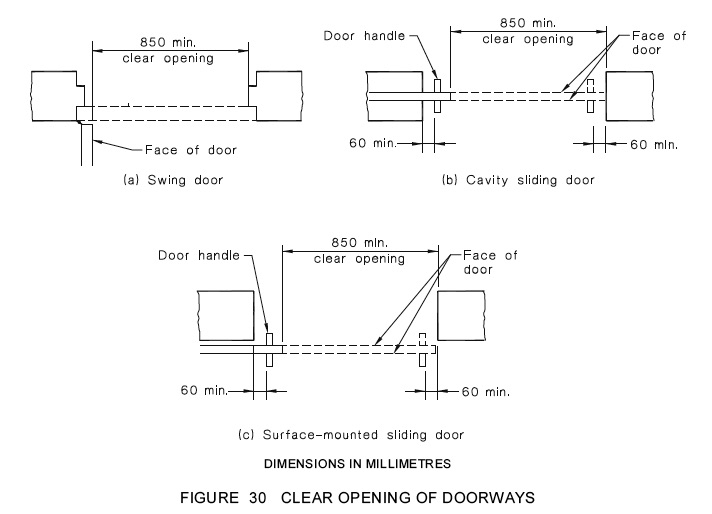
This is a really common question. The Australian Standards AS1428.1 requires a minimum clear opening of 850mm to provide clearances for the 90th Percentile wheelchair. Practically, smaller door openings will provide for smaller wheelchairs, however, the Standards have been derived, with a line in the sand and, provided your doorway is a min 850 clear of any obstructions, it is lawful. This width is derived from limited funding research of a small sample group of wheelchair users in the 1980's, and desperately needs reconsideration given the advancing technologies and predominance of motorised wheelchairs today.
The reality is that some wheelchairs can fit through much smaller openings safely, and other wheelchairs are simply too wide, even for an 850 clear opening. In a private house, you could, by using personal ergonomic measurements, design the door widths and corridors to suit the resident's clearance requirements and not follow the standards at all. In a commercial building however, or in public spaces of residential apartments, you must(with some exceptions) adopt the AS 1428.1 requirements. The Standards are available for Purchase from the Standards store. Link: https://store.standards.org.au/
There are other exceptions to the door width required by the Standards. In NSW Nursing homes, for instance, doorways are required to be wider than the minimum in the standards, especially when occupants are evacuated in emergency situations while remaining in their beds. Clearances are needed to fit the bed through the door (obviously without tipping it sideways, since there is a resident on the bed!) Details for those doorway clearances and corridor widths are stipulated in the building code and big problems (with big rectification costs) are caused by mere millimetre indiscretions.
There's more to traversing through a door opening than simply getting the door size right. There are circulation space requirements located on either side of the door to enable a person to operate it, and there are door handle clearance requirements, as well as requirements related to the force required to operate the door. All of these limitations mean that you'd better obtain the right advice first up, to avoid costly rebuilds. Contact Sydney Access Consultants for a review of your project.
Disability Access to Child Care Centres
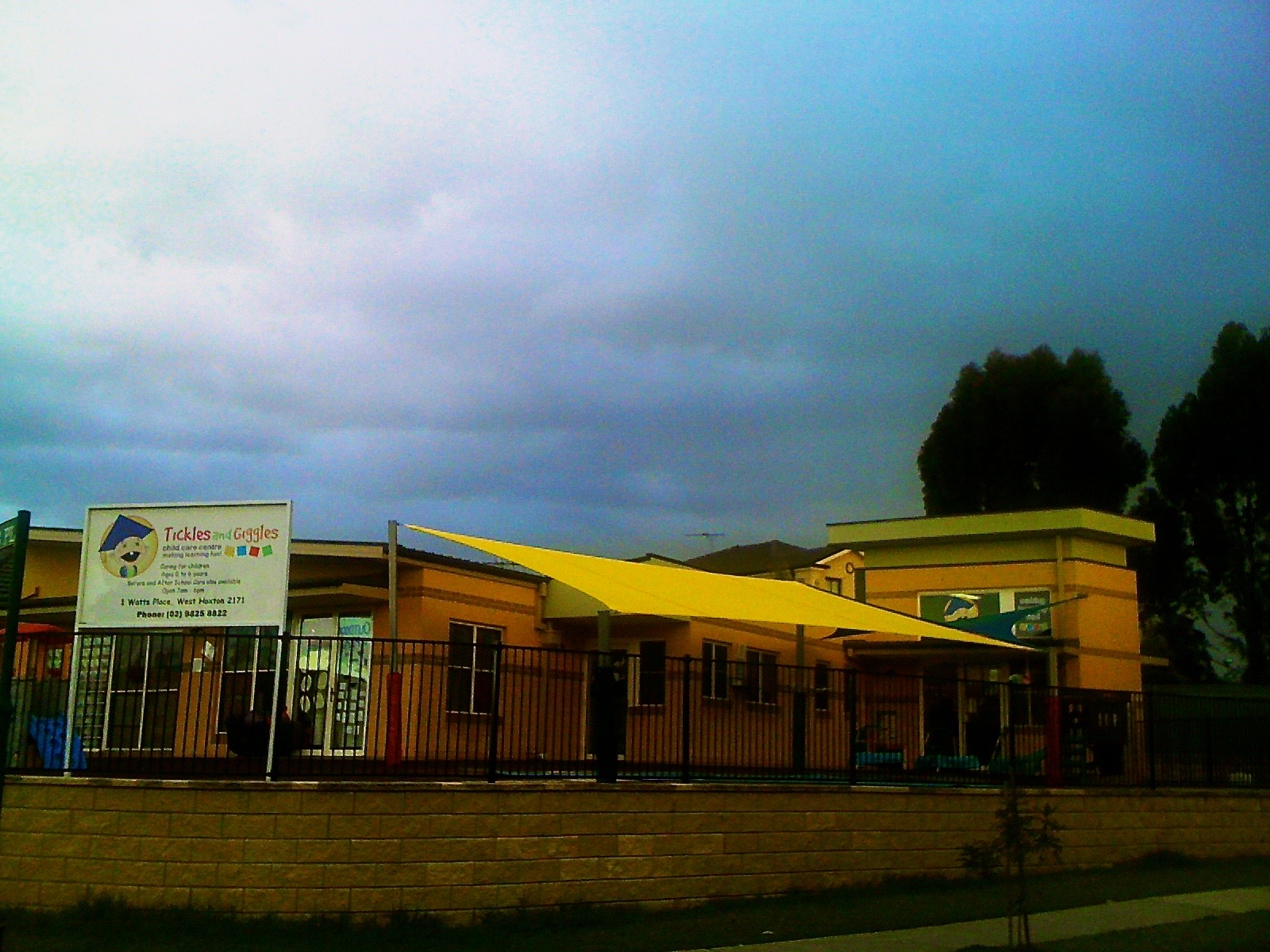
Over the last 40 years, I've designed Child Care Centres for both the private and public sector, around 20, I guess. They each have one common thread, namely, good access. Mothers with prams and a toddler in tow, vehicular movement and safe separation for daydreaming pedestrians, consideration for the circulation spaces required by groups of people moving together, shower and toilet facilities for those little accidents, with all the space required for a teacher to assist in the cleanup... You get the idea. Identifying these thoughts for design generally, doesn't consider the Building Code's requirements for disability access. However, if you resolve those parameters adequately, then you'll quickly see that a person who takes advantage of the use of a wheelchair to assist with mobility, can readily circulate within the spaces you've provided and compliance with the Disability Access to Premises Standards 2009 is easily achieved.
So what are the key elements of circulation in a child care centre?
1) Safe car parking, wide enough for a parent to unload the children, unfold a pram, grab all the bags etc, all the while keeping the children out of the traffic aisle. It's true that you must provide a car space compliant with AS 2890.6, which conveniently satisfies the needs of every parent drop off. If only you had the luxury of space to provide an open shared zone between every two vehicles!
2) Safe, step free walkway so that mum can push the pram with one hand, while holding an excited toddler in the other. Conveniently, you must provide a step free accessible path of travel at least 1m clear wide, for wheelchair access from the accessible vehicle bay to the principal pedestrian entry, all to AS 1428.1. Why not make every space as useful to accomodate prams?
3) A step free entry door, preferably under cover, in a zone secured by fencing so that toddlers cannot run off into the carpark, with circulation space adequate for mum to park the pram, step around it, and operate the security door. Under the BCA and AS 1428.1, you must provide a door with min 850 clear opening, with accessible lever action handles, with enough circulation space for a wheelchair user to side up against the door and operate the intercom and levers. There are strict minimum circulation spaces required on the hinge side and the handle side of the opening.
4) A step free door threshold, for convenient pram access. You must provide a step free threshold for disability access to AS 1428.1
5) The ability to turn the pram around and exit the door without assistance. You must provide circulation space in a corridor to enable a wheelchair to turn 180 degrees, to AS 1428.1 Similarly, the exit side of the door must provide at least the min circulation spaces required for wheelchair user to open the door from the inside to exit without assistance.
I could continue this process throughout the child care centre and into the playground, but by now you ought realise that disability access is not a burden, in fact, it is quite a useful design feature for everyone, particularly in a child care setting.
There are exceptions to the requirement for disability access within child care centres, store rooms for instance, and some other areas. Please send us your design for a review prior to DA so that we can assist you in meeting the disability access requirements without compromising child numbers.
Accessible (Disabled) Toilets in Education Facilities
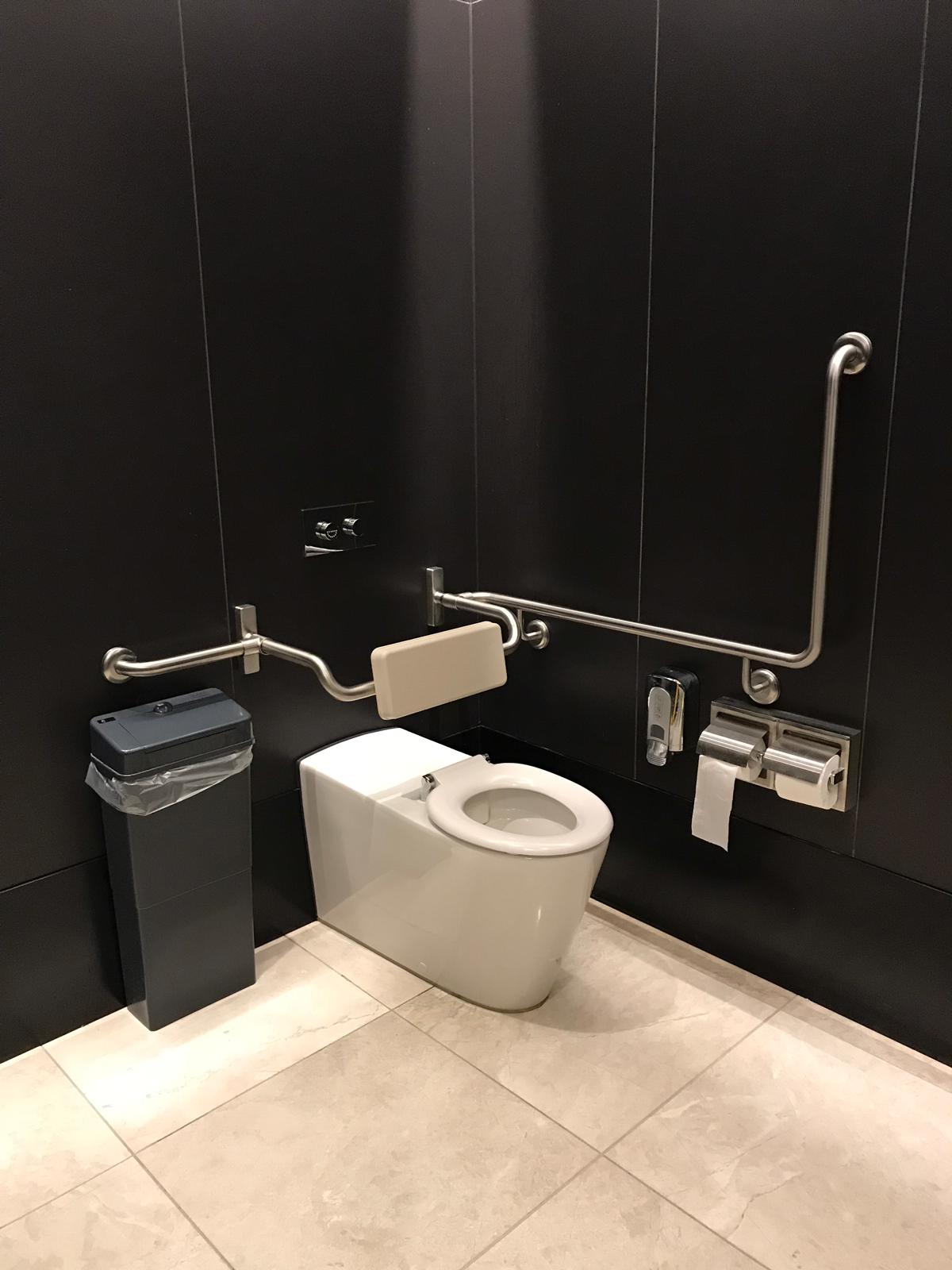
There are numerous private colleges throughout Sydney and we are regularly asked to attend the site to review a problem raised by the Building Certifier during construction. A little bit of forward planning can eliminate those frustrating moments and delays.
We recommend that a review of the design drawings be undertaken prior to the commencement of construction, at the latest. This enables us to guide your design decisions with respect to the built environment, to minimise the potential for a claim abasing you under the Disability Discrimination Act 1993. You are further notified to review your obligations under the Disability Access to Education Standards prepared by the Australian Human Rights Commission.
For any School, BCA Classification 9(b), with very few exceptions, an accessible unisex bathroom must be provided. The exact circumstances of your development will enable an access consultant to determine whether any of the potential exceptions apply to your development, therefore, you really ought to issue your plans early in the design stages to satisfy yourself that you have adequate floor area and circulation spaces to meet the requirements of the Building Code.
Depending on the door location and plan layout of fitments, the space required for circulation space within an accessible toilet must be at least, say 2640 x 2100mm, clear of wall linings, tiles and so on.
There are also mandatory inclusions under AS1428.1 for instance:
- An accessible pan & seat
- A sanitary pad disposal unit
- Grab rails and back rest
- A vanity basin without plumbing protruding underneath and onto the floor
- A shelf
- A coat hook
- A door with a minimum clear opening of 850mm (a 920 door leaf might just achieve that depending on the installation technique and thickness of the door).
- Adequate lighting
- A non slip floor surface
- appropriate accessible signage
- accessible door furniture
It’s a best case scenario to send us your plans prior to the commencement of construction (at the latest) so that your layout can be certified as capable of compliance prior to your commencement.